## **Professional Boiler Repair & Installation Services in Milwaukee, WI — Expert Heating Solutions**

We restore safe, efficient heat to homes across Milwaukee and southeastern Wisconsin. This guide walks you through the most common boiler problems, how our technicians find leaks and pressure issues, and when to call for emergency boiler repair to protect your family and property. You'll also learn what affects new boiler installation choices, why high-efficiency models pay off over time, and how hydronic systems boost comfort and efficiency. We cover practical repair options, cost drivers, and maintenance strategies so you can make informed decisions about replacement, upkeep, and hydronic repairs. Throughout, we reference local service considerations and show how a [maintenance plan](/healthy-home-club) and 24/7 emergency support fit into a long-term heating strategy.
## **Common Boiler Problems — How We Diagnose and Repair Them**
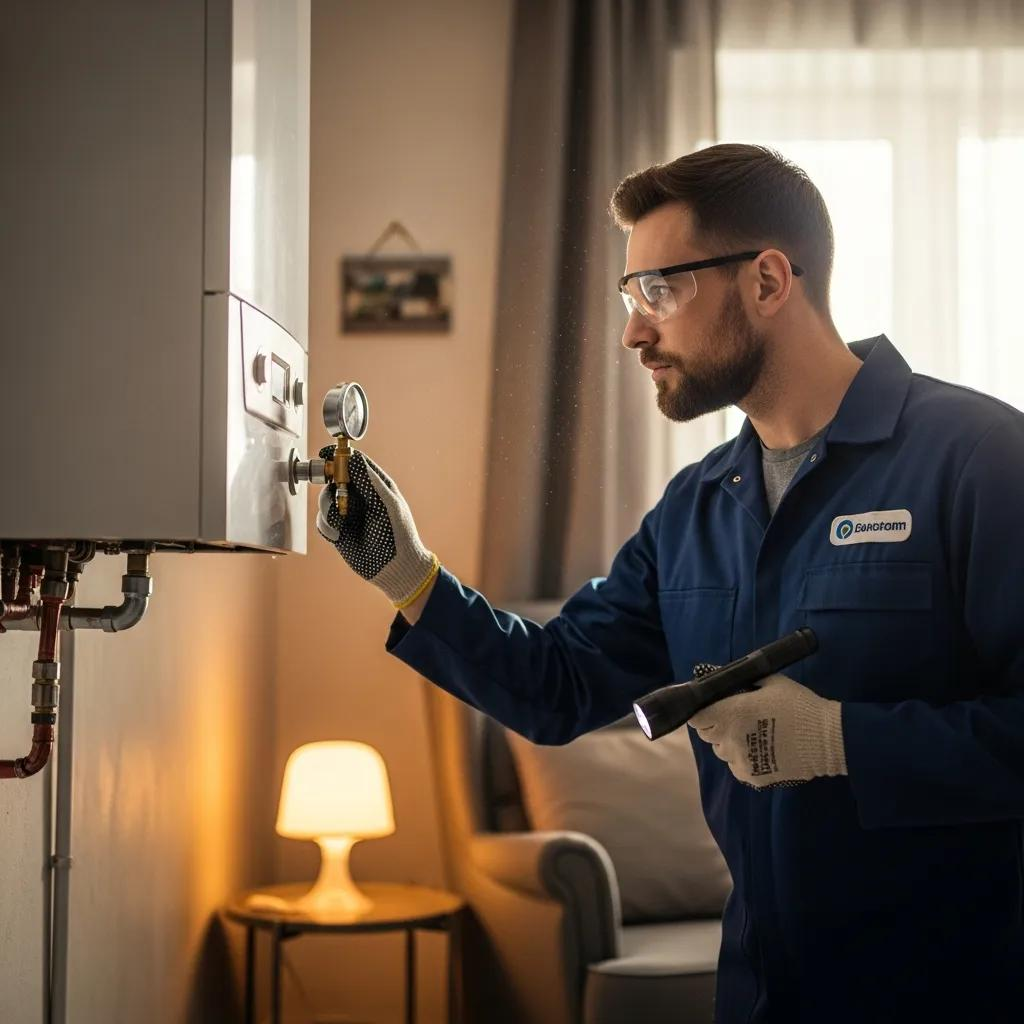
Boiler issues usually show up as no heat, visible leaks, pressure that's too low or too high, strange noises, or frequent on/off cycling. Each symptom points to parts like the heat exchanger, pressure relief valve, or circulator pump. Our diagnosis starts with a visual inspection, pressure-gauge checks, and isolating zones to narrow the source. From there we perform targeted repairs—replacing valves, fixing corroded fittings, or servicing pumps. Homeowners can do simple checks like confirming thermostat settings and reading the pressure gauge, but call a pro if you find leaks, repeated pressure loss, or ongoing noises. Early diagnosis restores efficiency, lowers carbon-monoxide risk, and helps extend the life of your boiler.
- **No Heat**: Verify thermostat settings and power first; if those are fine, the ignition system or circulator pump may be at fault.
- **Visible Leak**: Turn off water and power to the boiler and call a technician to locate and stop the leak.
- **Low Pressure**: Only repressurize via the filling loop if you're sure how the system works; ongoing pressure loss usually means a leak or failed valve.
- **Odd Noises**: Kettling or banging often means scale on the heat exchanger or trapped air—professional flushing and bleeding are usually required.
These quick checks shorten downtime and point the technician to the right next steps. The table below links symptoms to likely causes and common professional repairs so you know what to expect before help arrives.
The table below maps common components to symptoms, likely causes, and typical repairs to guide homeowner understanding before professional service.
| Component | Symptom | Likely Cause | Typical Repair |
| --- | --- | --- | --- |
| Heat exchanger | No heat or weak heat | Scale buildup, corrosion, or a cracked exchanger | Descale the exchanger, replace it, or recommend full boiler replacement |
| Pressure relief valve | Water on the floor or pressure spikes | Worn or failed valve, or thermal expansion issues | Replace the valve and inspect the expansion tank |
| Circulator pump | No circulating heat or noisy pump | Pump failure or worn bearings | Replace or rebuild the pump and check electrical connections |
| Expansion tank | Pressure swings or short cycling | Waterlogged tank or failed diaphragm | Drain or replace the expansion tank and rebalance the system |
### **How We Diagnose and Repair Boiler Leaks and Pressure Problems**
Finding leaks and pressure problems starts with careful, controlled checks: look for moisture on the boiler and visible piping, read the pressure gauge at operating temperature, and isolate zones to spot where pressure drops occur. Our techs use pressure testing, dye tracing, and component isolation to locate hidden leaks in pipe joints, valves, or the pressure-relief assembly. We also inspect around the heat exchanger and fittings for corrosion. Typical repairs include replacing faulty relief valves, tightening or swapping corroded fittings, servicing or replacing the expansion tank, and pressure-testing after repairs to confirm system integrity. If you see active leaks or unstable pressure, get professional help right away—do not run a compromised system.
### **When to Call for Emergency Boiler Repair**
Call for emergency [repair](/boiler/boiler-repair) immediately if you have active leaks, no heat in freezing weather, violent banging noises, or any reason to suspect carbon monoxide exposure. In an emergency, shut off power and fuel if it's safe to do so, ventilate the area, and leave if CO is suspected; then contact emergency service for a service response. Our emergency team performs safety checks on arrival, takes temporary measures to stop leaks or isolate hazards, and works quickly to restore safe operation. Rapid intervention prevents water damage, avoids frozen-pipe failures, and protects occupants from exposure to combustion byproducts.
## **How Much Does New Boiler Installation Cost in Milwaukee?**
There isn't a one-size-fits-all price for [boiler installation](/boiler/boiler-installation)—cost depends on technical and site-specific factors. Key drivers include boiler type, fuel source, system size, and how much venting or piping work is required. High-efficiency condensing boilers usually give better long-term operating costs, but installing one can mean more complex venting, condensate drains, or control upgrades. The best next step is an on-site assessment and a [custom HVAC quote](/hvac-quote) that reflects your home's existing infrastructure and performance goals. [Financing options](/financing) and current programs can also change the upfront picture—discuss these during the quote to weigh initial cost against long-term savings.
Primary factors that influence installation decisions are summarized here:
- **Boiler Type**: Combi, condensing, [steam](/boiler/steam-boilers), or system boilers all have different installation and performance needs.
- **System Size and Sizing Accuracy**: A proper load calculation prevents oversizing and inefficient cycling.
- **Existing Infrastructure**: Venting, piping, and electrical updates increase labor and materials.
- **Permits and Modifications**: Local codes and required upgrades affect timeline and scope.
Those factors combine to define the project scope and explain why a custom quote is essential. The table below shows how common factors affect installation decisions.
| Factor | Impact | How It Affects Decision |
| --- | --- | --- |
| Boiler type | Changes venting and controls | Determines required ventwork, space, and clearances |
| Fuel type | Affects efficiency and operating cost | Guides burner selection and combustion venting needs |
| Site complexity | Raises labor and materials | May require piping reroutes, structural access, or control upgrades |
| Removal/disposal | Adds to project scope | Old equipment removal can increase time and labor |
### **Which Factors Most Influence Boiler Installation Cost?**
Correct sizing is critical: an undersized boiler will struggle, while an oversized unit will short-cycle and reduce efficiency and component life. Fuel type and venting needs change the work involved—switching fuels or upgrading to a condensing unit often requires new venting, condensate drains, or combustion-air provisions. Permits, removing old equipment, and tying into existing hydronic distribution (radiators, baseboards, radiant floors) also affect labor and material totals. Because these variables interact, an on-site assessment and a custom HVAC quote give the most reliable cost estimate.
### **What Are the Benefits of Energy-Efficient Boilers?**

High-efficiency boilers—especially condensing models with AFUE ratings around 90% and up—recover more heat from combustion and cut fuel use, lowering operating costs and emissions over time. These units use larger or more efficient heat exchangers and control return-water temperatures to capture latent heat, which works well with hydronic and radiant systems. Owners usually notice quieter operation, better comfort, and potential eligibility for [current programs](/promotions) that improve payback on the upgrade. To evaluate ROI, pair efficiency gains with a maintenance plan to keep performance and warranties in good standing.
## **Hydronic Heating: Advantages and Common Repairs**
Hydronic heating moves heat with water to deliver even, quiet warmth through radiators, baseboards, or radiant floor loops. Because water transports heat more effectively than air, hydronic systems often run at lower temperatures for the same comfort level—improving boiler efficiency and reducing fuel use. Common repairs include replacing circulator pumps, bleeding radiators to remove airlocks, fixing zone valves, and repairing pipe leaks or insulation issues to restore balanced heat. These mechanical traits explain why hydronic systems are a popular choice for steady, zoned comfort.
Hydronic heating delivers clear homeowner benefits:
- **Even Heat Distribution**: Water-based systems hold stable surface and room temperatures without strong air currents.
- **Quiet Operation**: No large blowers, so hydronic systems run quietly compared with forced air.
- **Improved Air Quality**: Hydronic systems don't rely on ducted air movement, which reduces airborne allergens.
Those strengths make hydronic systems ideal for radiant floors, bathrooms, and homes where allergy control or quiet operation matters. The table below compares system components, attributes, and homeowner benefits.
| System Component | Attribute | Benefit |
| --- | --- | --- |
| Radiant floor loops | Low-temperature surface heating | Steady, comfortable warmth with fewer drafts |
| Circulator pump | Controlled water delivery | Precise zoning and lower energy use |
| Zone valves/controls | Zoned operation | Targeted comfort and energy savings |
### **How Hydronic Heating Improves Comfort and Efficiency**
Hydronic heating improves comfort by storing and delivering heat with water, which smooths temperature swings and eliminates forced-air drafts. Radiant floors are a good example—warming surfaces directly for consistent, comfortable heat. Efficiency gains come from lower supply temperatures, minimal duct losses, and compatibility with condensing boilers that recover latent heat. A properly balanced hydronic system with thermostatic zoning can heat occupied spaces precisely while reducing fuel use in unused areas. Schedule a system assessment to evaluate your distribution and possible upgrades.
### **Common Hydronic Repair Services We Offer**
Typical hydronic repairs include bleeding radiators to remove trapped air, diagnosing and replacing failed circulator pumps, servicing or replacing zone valves and thermostats, and fixing leaks in piping or manifolds. Our technicians run multi-point inspections to check pressure stability, pump operation, and proper mixing and temperature control. Upgrades like modern zone controls or efficient pumps often deliver immediate comfort and energy improvements. If problems recur, a full diagnostic helps find root causes and recommend long-lasting fixes.
## **Why Choose Aliance Home Services for Boiler Repair and Installation?**
Based in Port Washington, Aliance Home Services supports southeastern Wisconsin with HVAC, plumbing, and electrical expertise—and we pride ourselves on clear communication and dependable emergency response. We provide 24/7 emergency service and walk homeowners through diagnostic findings, repair choices, and maintenance recommendations so you can weigh repair versus replacement and efficiency upgrades. Our maintenance plans and documented scheduling terms help prevent common failures with annual tune-ups and multi-point inspections that preserve efficiency and extend equipment life. To discuss service, request a personalized HVAC quote or ask about maintenance-plan options via the company's [contact channels](/contact).
Aliance Home Services stands behind several customer-focused commitments:
- **24/7 Emergency Support**: service response with safety-first protocols for urgent boiler issues.
- **Transparent Communication**: Clear explanations of findings, repair steps, and options.
- **Maintenance Plans**: Annual tune-ups, documented scheduling terms, and preventive inspections.
### **What Makes Our Emergency Boiler Service Fast and Dependable?**
Our emergency workflow triages calls, dispatches trained technicians quickly, and runs safety checks on arrival to isolate hazards and stabilize systems before repairs. Technicians focus first on mitigation—stopping leaks, securing fuel or electrical sources, and providing temporary fixes—while outlining the path to complete repair or replacement. We document findings and explain options clearly so you can decide with confidence. This structured response reduces risk and speeds the return of reliable heat.
### **How Our Maintenance Plans Extend Boiler Life and Efficiency**
Maintenance plans include annual tune-ups, combustion and safety inspections, control calibration, and heat-exchanger cleaning to prevent efficiency loss and catch wear before it becomes a failure. Regular servicing helps preserve AFUE performance, reduces emergency visits, and often gives documented scheduling terms and written plan benefits or labor. Those preventive steps translate into longer equipment life and better long-term value. Enrolling in a maintenance plan before the heating season helps help support dependable performance when temperatures drop.
## **Conclusion**
Professional boiler repair and installation keep your home warm, safe, and energy-efficient through the cold months. With clear diagnostics and solutions tailored to your needs, you can address common issues while maximizing system life and performance. Don't wait for a breakdown—take proactive steps by exploring our maintenance plans and emergency services. Contact us today to schedule an assessment and enjoy the peace of mind that comes with dependable heating.