## **What You Need to Know About AC Refrigerant: Comprehensive Guide to Types, Properties, and Maintenance**

At Aliance Home Services, we understand that AC refrigerants are integral to the efficient operation of air conditioning systems. Our team in Port Washington, WI, is committed to providing you with clear, practical information about these substances—their types, roles, and the best maintenance practices to keep your HVAC systems running optimally.
Many homeowners and business owners often overlook how the right refrigerant can influence system efficiency and lifespan. Here, we aim to illuminate key facets of refrigerants along with the environmental and regulatory factors that affect their use. This guide also covers safe handling and future developments shaped by evolving industry standards.
With our expertise, we dive into how refrigerants function, the necessary safety precautions, and effective methods to recharge your AC system. Our goal is to empower you with comprehensive knowledge for maintenance and decision-making about refrigerants in your HVAC setup.
## **What Are HVAC Refrigerants and Why Are They Essential?**
HVAC refrigerants are chemical compounds that absorb and release heat during the air conditioning cooling cycle. By transitioning between liquid and gas phases, they transfer heat out of indoor environments, thereby preserving comfortable temperatures in both residential and commercial spaces in Port Washington, WI.
The optimal performance of HVAC systems largely hinges on the correct refrigerant quantity and type. When properly charged, your system operates efficiently, saving energy and extending equipment lifespan. Conversely, insufficient or inappropriate refrigerant can cause your system to overwork, increase energy costs, and risk costly breakdowns.
For those seeking to maintain their HVAC systems in Port Washington, WI, our service professionals at Aliance Home Services are here to help support your system stays efficient throughout all seasons.
### **Definition and Role of Refrigerants in Air Conditioning Systems**
Refrigerants are specialized fluids designed to alternate between gaseous and liquid states, enabling heat transfer in air conditioning cycles. This process removes heat from indoor air and releases it outside, maintaining desirable indoor temperatures.
Because of their low boiling points, refrigerants evaporate readily, absorbing heat effectively. We encourage customers to understand how these substances work, as this knowledge is beneficial for optimizing HVAC performance and troubleshooting potential issues.
### **How Refrigerants Affect HVAC System Performance and Lifespan**

Refrigerants directly influence both the efficiency and durability of your HVAC system. Maintaining proper levels can support effective heat exchange, reducing energy consumption and costs. At Aliance Home Services, our technicians routinely check refrigerant levels to avoid leaks and inefficiencies that could jeopardize your system's longevity.
If refrigerant levels drop beneath recommended standards, you may notice diminished cooling capacity, higher utility bills, and risks of compressor damage. Regular maintenance proves essential to avoid such issues and to protect your investment in HVAC equipment.
## **Which Types and Chemical Classes of AC Refrigerants Are Commonly Used?**
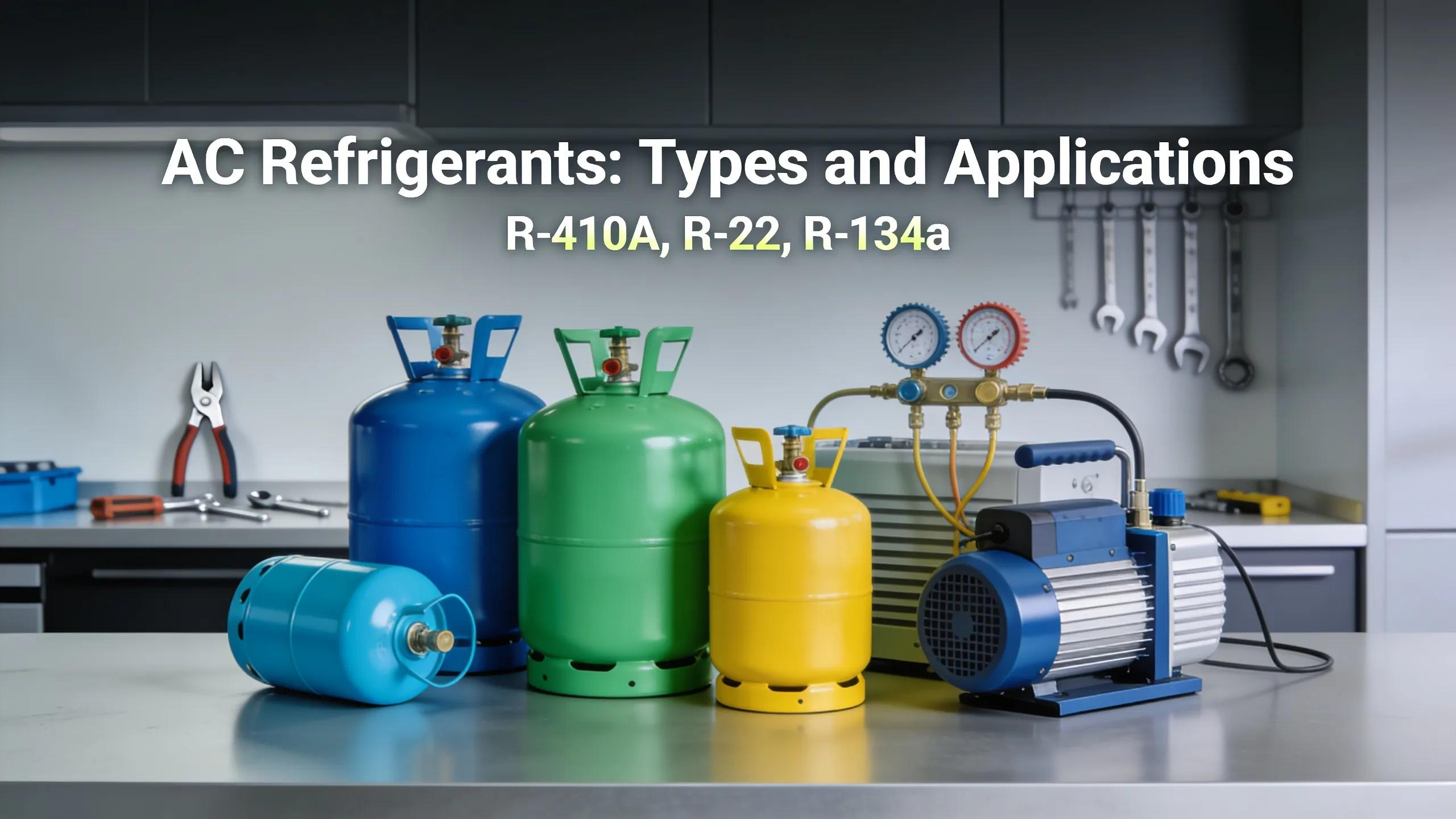
Familiarity with the chemical classifications of refrigerants is vital when selecting or servicing your system. The main categories include Chlorofluorocarbons (CFCs), Hydrochlorofluorocarbons (HCFCs), and Hydrofluorocarbons (HFCs), each with distinct characteristics and environmental impacts.
CFCs dominated past decades but are now largely phased out due to their ozone-depleting nature, a change driven by global environmental protocols. HCFCs served as transitional replacements but are also being phased out for similar reasons. Currently, HFCs are prevalent because of their efficiency, although their high global warming potential (GWP) is prompting shifts towards more eco-friendly alternatives.
### **Overview of Chlorofluorocarbons, Hydrochlorofluorocarbons, and Hydrofluorocarbons**
In prior decades, chlorofluorocarbons were preferred for refrigeration due to their non-flammable and low-toxicity nature. However, their negative impact on the ozone layer led to worldwide restrictions and a search for safer substances.
Hydrochlorofluorocarbons appeared as a step forward with less ozone depletion potential but are being phased out to further reduce environmental harm. Our experts advocate that customers stay informed about these regulatory trends for future system compatibility.
Hydrofluorocarbons now see widespread use in HVAC systems for their reliable performance, though their significant GWP prompts increased environmental scrutiny. This has accelerated interest in refrigerants with lower global warming impact.
### **Emerging Low-GWP and Environmentally Friendly Refrigerants and Their Properties**
The industry is adopting low-global warming potential (GWP) refrigerants like hydrofluoroolefins (HFOs) and natural options such as ammonia and carbon dioxide. These substances offer sustainability benefits while maintaining efficiency.
HFOs, in particular, have minimal ozone depletion potential and much lower GWP, representing important advances in environmentally conscious HVAC solutions. At Aliance Home Services in Port Washington, WI, we are committed to guiding our clients through these innovations to help support their systems meet both performance and sustainability goals.
## **How Do Environmental Regulations Impact AC Refrigerant Usage?**
Environmental regulations shape the types of refrigerants authorized for use in HVAC systems. Worldwide, efforts to mitigate climate change have prompted governments to enforce stricter standards targeting reductions in greenhouse gas emissions linked to refrigerants.
As a result, common service issues include a growing emphasis on transitioning to low-GWP refrigerants to meet these requirements while preserving system efficiency. Staying compliant with evolving regulations is critical for industry professionals and system owners alike.
### **Global Phase-Out Timelines for High-GWP and Ozone-Depleting Refrigerants**
International agreements such as the Montreal Protocol and subsequent amendments have set schedules for phasing out high-GWP and ozone-depleting refrigerants. Many countries have committed to eliminating these substances to protect the environment.
For HVAC systems in Port Washington, WI, adherence to these phase-out timelines is crucial. Our team at Aliance Home Services continuously monitors regulatory updates to advise clients and help support their systems comply with current mandates.
### **Compliance Requirements and Trends in 2024-2026 Regulatory Landscape**
Between 2024 and 2026, regulatory frameworks are tightening, necessitating adoption of new refrigerant technologies and methods. Manufacturers and service providers are adjusting to these trends by focusing on sustainable solutions and maintaining high service standards.
We encourage our clients in Port Washington, WI to partner with experienced professionals like Aliance Home Services to navigate these changes successfully and maintain peak system performance amid evolving laws.
## **What Are the Safety and Handling Best Practices for AC Refrigerants?**
helping support safety during refrigerant handling protects both humans and the environment. Aliance Home Services prioritizes best practices during all service processes to mitigate risks.
### **Essential Precautions to Prevent Chemical Exposure and System Damage**
- **Personal Protective Equipment (PPE):** Our technicians consistently use comprehensive PPE including gloves and safety goggles. This gear protects against contact-related skin and eye irritation during refrigerant handling or system inspection.
- **Proper Ventilation:** We perform servicing in well-ventilated areas to prevent the accumulation of harmful gases. Adequate airflow is fundamental to a safe working environment and helps preserve indoor air quality.
- **Leak Detection:** Routine inspection for refrigerant leaks is part of our service commitment. Early detection prevents environmental hazards and can support that your HVAC system operates efficiently without unnecessary strain.
### **Proper Refrigerant Recovery and Disposal Procedures**
Following strict recovery and disposal protocols is crucial to avoid environmental contamination. At Aliance Home Services, we adhere to local and federal regulations when recovering refrigerants from HVAC systems.
Our process includes using certified recovery equipment designed to capture refrigerants safely. We strictly follow manufacturer guidelines tailored to specific refrigerant types, helping support full compliance and system integrity.
Finally, any recovered refrigerants are disposed of or recycled only through authorized facilities specializing in environmentally responsible handling. The service process is intended to show that our approach prioritizes ecosystem protection and legal adherence.
## **How Is the AC Refrigerant Recharge Process Conducted Safely and Effectively?**
Recharging refrigerant is vital for maintaining optimal HVAC system function. At Aliance Home Services, our technicians execute the process with precision to help support safety and performance.
### **Step-by-Step Guide to Recharging Refrigerant in Air Conditioning Systems**
- **Identify Refrigerant Type:** We begin by determining the exact refrigerant type your system requires, helping support compatibility and safety during recharge.
- **Set Up Recovery Equipment:** Specialized recovery machines are connected to remove any remaining refrigerant securely before new charging.
- **Evacuate the System:** Using vacuum pumps, we effectively remove air and moisture from your HVAC system to prevent contamination and system damage.
- **Recharge:** We carefully introduce the manufacturer-specified quantity of refrigerant, closely monitoring pressure gauges to confirm accuracy and system integrity.
This meticulous approach can support your system regains full cooling capability without compromising safety or durability.
### **Common Signs Indicating the Need for Refrigerant Recharge**
- **Inadequate Cooling:** If your air conditioning system fails to cool adequately, it often points to insufficient refrigerant levels. We recommend scheduling an assessment promptly to diagnose and resolve the issue.
- **Ice Buildup:** Ice formation on the evaporator coils signals abnormal refrigerant flow, which can impair system function. Our experts are trained to detect and address these symptoms efficiently.
- **Unusual Sounds:** Hissing or bubbling noises may suggest refrigerant leaks. Immediate inspection can prevent further damage and avoid costly repairs.
Being attentive to these warning signs allows you to act swiftly and extend the life of your HVAC system.
## **What Factors Influence AC Refrigerant Replacement Costs?**
Understanding what determines refrigerant replacement expenses helps you plan your HVAC maintenance budget effectively. Several variables contribute to overall costs.
### **Components Affecting Replacement Expenses and System Compatibility**
- **Refrigerant Type:** Advanced or eco-friendly refrigerants may carry higher upfront costs due to their specialized properties and production methods. Choosing the right type based on system compatibility and long-term benefits is crucial.
- **System Size:** Larger HVAC systems naturally require more refrigerant, which increases material and labor costs associated with replacement.
- **Service Provider Rates:** Labor prices vary depending on service provider expertise and regional factors. Our team at Aliance Home Services strives to offer clear service options without compromising quality for clients in Port Washington, WI.
### **Cost Comparisons Among Different Refrigerant Types and Alternatives**
Traditional refrigerants such as certain HFCs may appear less costly initially. However, market shifts driven by regulation and environmental concerns are influencing availability and pricing.
Low-GWP refrigerants, while sometimes more expensive upfront, often contribute to long-term savings through improved energy efficiency and compliance with environmental standards. We advise weighing these factors carefully to choose the most cost-effective and sustainable option.
## **What Future Trends and Technological Advances Are Shaping AC Refrigerants?**
The HVAC industry continues to evolve rapidly, integrating new technologies and addressing increasing environmental demands.
### **Innovations in Hydrofluoroolefins and Natural Refrigerants**

We are witnessing significant advances in refrigerant formulations, particularly in hydrofluoroolefins (HFOs) and natural refrigerants such as carbon dioxide. These options combine sustainable profiles with reliable performance, aligning perfectly with global climate initiatives.
These innovations are transforming HVAC system design and operation. Here at Aliance Home Services in Port Washington, WI, we stay at the forefront of these technologies to provide our clients with the most effective, eco-friendly cooling solutions.
### **Impact of Emerging Refrigerant Technologies on HVAC Industry**
The introduction of innovative refrigerants is driving the development of sophisticated HVAC systems that offer enhanced installation ease and operational efficiency. Industry professionals must pursue careful service procedures and certification to keep pace with these advancements.
Our commitment at Aliance Home Services includes continuous professional development, helping support we deliver services that meet the highest standards and embrace emerging technologies with agility.
## **Which Frequently Asked Questions Clarify Common Concerns About AC Refrigerants?**
Clients frequently have questions about refrigerants and their safe, effective use. We address some common inquiries below to assist you in making informed choices.
### **What Is the Safest AC Refrigerant Available Today?**
Currently, refrigerants like R-32 and R-290 are among the safest due to their low toxicity and reduced environmental impact. As manufacturing and regulatory landscapes shift, we continuously evaluate refrigerants to recommend the safest solutions to our Port Washington customers.
### **How Can I Verify the Environmental Impact of My Refrigerant?**
Understanding the environmental footprint of your refrigerant involves reviewing its global warming potential (GWP) and its compliance with phased regulations. We provide support in accessing authoritative industry databases and guides to help you assess the sustainability of your HVAC refrigerant choices.
## **Get Expert HVAC Refrigerant Services in Port Washington, WI**
At Aliance Home Services, we are dedicated to helping residents and businesses in Port Washington, WI maintain efficient and environmentally responsible HVAC systems. Whether you need professional refrigerant management, maintenance, or installation, our technicians deliver reliable, safe, and compliant services.
Contact us through our website or customer service portal to schedule an assessment or consultation. Let us help you enhance your comfort while protecting the environment with state-of-the-art refrigerant solutions.